
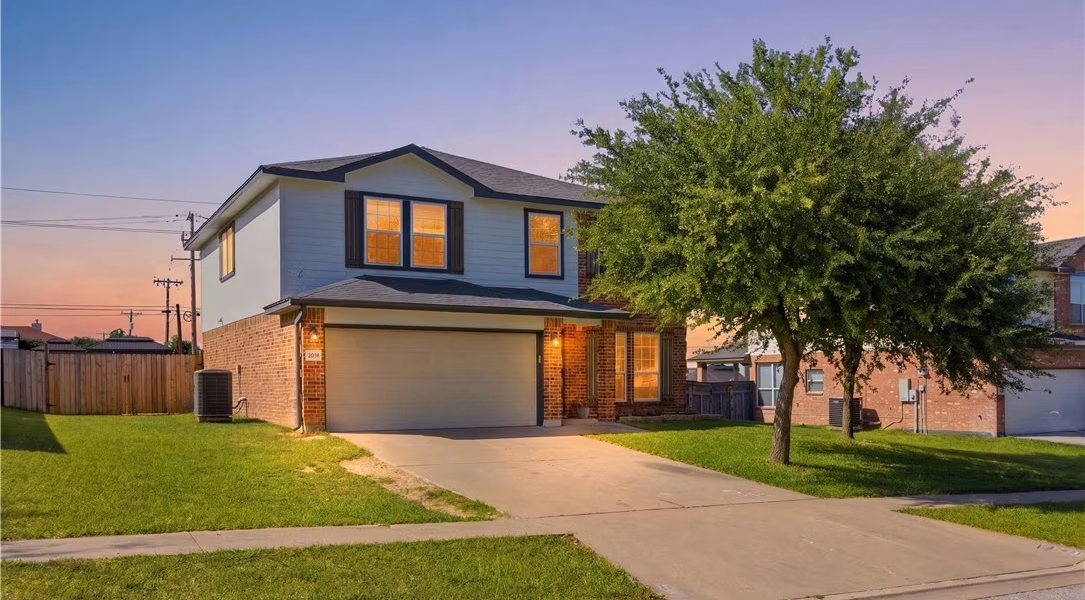
Killeen does not behave like a resort town, a college-only market, or a sleepy Central Texas suburb waiting for a big employer to arrive. The employer is already there, and it sits at the edge of daily life. That is why rental housing demand in Killeen feels less like a trend and more like a local pattern shaped by orders, training cycles, family moves, and the steady churn of Army life. Buyers looking at this market are usually not chasing glamour. They want useful homes near work, schools, grocery runs, and the roads that lead to Fort Hood.
For investors, that plain setup is the point. A market does not need a skyline to stay busy. It needs people with clear housing needs and a reason to rent now instead of waiting two years to buy. Killeen has that mix, and it shows up in the way local real estate visibility matters for landlords, agents, and service providers trying to reach moving households. Older articles and listings may still mention Fort Cavazos, the name used from 2023 to 2025, but the local housing story remains tied to the same Army post and the same renter habits.
Why Rental Housing Demand Stays Active Near Fort Hood
Fort Hood gives Killeen a renter base that renews itself. Some people arrive with orders and need a home fast. Others leave after a few years and open space for the next family. That motion can look messy from the outside, but for a landlord it creates a pattern that is easier to understand than many fast-growth markets built only on speculation.
The rhythm is not perfect, but it is readable. A buyer who studies move-in timing, school calendars, and local rent ranges can make better decisions than someone who treats the city like a normal suburb with one large employer.
The base creates movement in both directions
A normal suburban market often waits for job growth, mortgage rates, and school calendars to line up. Killeen has those forces too, but the Army adds another layer. Service members receive orders. Families compare on-post and off-post options. Single soldiers may want apartments or shared rentals. Married households often want yards, garages, and a drive that does not punish them before morning formation.
That does not mean every home rents overnight. It means the renter pool is always being refreshed. The Killeen rental market has a built-in reason for turnover, and that makes it different from a small town where one factory layoff can cool an entire block.
Think about a family arriving in July after a long move from another state. They may not know the city yet. They may be choosing between a home in Killeen, a place in Harker Heights, and a cheaper option in Copperas Cove. The house that wins is often the one with clear photos, honest terms, and a move-in date that matches their orders.
The non-obvious part is that turnover can be healthy. Many investors fear tenants leaving, but in a military town, planned movement is part of the system. A tenant who gives proper notice because of new orders is not the same risk as a tenant leaving because the area has lost work.
A steady renter pool is not the same as easy money
The mistake is thinking Fort Hood solves every problem. It does not. Military renters still compare price, condition, commute, pet rules, and school zones. They read reviews. They notice when a landlord treats maintenance like a favor instead of a duty.
A tired house near the gate can lose to a cleaner house farther away. That may surprise new investors who assume distance beats condition every time. It often does not. A family moving with children, pets, and boxes wants the home to work on day one.
This is where Fort Hood housing gets practical. The winning rentals tend to remove stress. Good air conditioning, working appliances, safe parking, and clear lease terms carry more weight than flashy upgrades. In a place where renters may be unpacking after a cross-country move, boring can be a selling point.
The better landlord also understands timing. A home that is ready two weeks too late can miss the household that would have paid fairly and stayed clean. In Killeen, speed matters, but only when the property is ready. Rushing a half-finished home onto the market can damage trust before the lease starts.
How Killeen’s Location Shapes Tenant Behavior
Killeen is not isolated in the way some outsiders imagine. It sits in a wider Central Texas web that includes Harker Heights, Copperas Cove, Belton, Temple, and the larger pull of Austin and Waco. That gives renters choices. It also means a landlord must understand why someone picks one side of town over another.
That choice is often emotional and practical at the same time. A renter may say the house “feels easier” without naming the exact reason. Usually, the reason is a mix of drive time, noise, shopping access, and how the block feels after dark.
Commutes matter more than downtown prestige
In a downtown-driven city, renters may pay more to be near restaurants and nightlife. Killeen is different. A short drive to the right gate, a smooth school drop-off, or easy access to U.S. 190 and I-14 can matter more than a trendy block. The daily path shapes the housing decision.
A soldier stationed near one part of Fort Hood may see a listing across town and decide it is not worth the time. A spouse working in Temple may make a different choice. A family with children in activities may care about evening traffic more than weekend dining.
This creates small markets inside the larger city. Two similar houses can perform in different ways because one sits near the renter’s routine and the other creates friction. The Killeen rental market rewards owners who study roads, not only rent charts.
Here is the quiet lesson. Renters do not rent a map. They rent a Tuesday morning. If Tuesday morning feels easier from one house than another, that home has an edge that may not show up in a spreadsheet.
Why nearby towns compete with Killeen
Killeen has scale, but nearby towns compete by offering a different feel. Harker Heights may appeal to renters who want a suburban mood. Copperas Cove can attract households watching price closely. Temple may fit families tied to health care jobs or a spouse’s work.
That competition does not weaken Killeen as much as it sharpens it. The city has to win on fit. A home near schools, shopping, and a manageable drive can beat a cheaper option that adds too much time.
The Texas rental property market guide can help you compare these choices once you replace broad city labels with street-level thinking. In Central Texas, the best location is not always the most expensive one. It is the one that matches the renter’s week.
A landlord buying near Killeen should also watch how renters talk. They may not say they want a “better submarket.” They say they need to be closer to the clinic, farther from noise, near a certain school, or near a route their spouse can manage. Those plain words often carry the real investment signal.
What Property Types Fit Military Renters in Killeen
The best rental in Killeen is often the one that respects real life. People need space for uniforms, tools, strollers, dogs, storage bins, and visiting relatives. They need a home that can survive daily use without turning every small issue into a repair call.
This is where military renters differ from the fantasy tenant some investors picture. They may have steady income, but they still have budgets, pets, children, long shifts, and stress from moving. A rental that lowers that stress earns attention.
The plain three-bedroom home carries more weight than it gets credit for
A three-bedroom single-family home is not exciting on paper, but in Killeen it can be the workhorse. It fits young families, roommates, and households that need an office or guest room. A fenced yard can help with pets. A garage can matter for storage as much as for parking.
Military renters often arrive with practical questions. Is the pet policy clear? Does the home have washer and dryer hookups? How far is the gate? Are the schools workable? Is the neighborhood quiet enough after long shifts?
Housing allowance helps shape the search, but it does not remove price pressure. Families still compare value. If two homes cost about the same, the one with fewer daily headaches usually wins.
Those questions should shape the buying decision before the paint color does. A landlord who buys a home with a poor layout and then tries to dress it up with cheap finishes may miss the point. Function rents first.
A four-bedroom home can work too, especially for larger families, but it is not automatic. If the extra bedroom comes with higher taxes, a weak roof, and a thin rent spread, the numbers may not hold. More square footage can also mean more upkeep. Buy the use case, not the room count.
Turnover planning matters more than fancy finishes
Killeen landlords should think about the next move-out before the first lease is signed. That sounds negative, but it is simple planning. Durable flooring, neutral walls, easy-clean surfaces, and strong documentation can save money when tenants rotate.
The counterintuitive insight is that a rental built for turnover can feel more respectful, not less. Tenants benefit when the property is easy to maintain. Owners benefit when the home can be cleaned, repaired, and shown without chaos.
This is also where Fort Hood housing differs from luxury-driven markets. A high-end fixture may not add much rent if the rest of the home creates hassle. A reliable HVAC system in a Texas summer will matter more to most renters than a dramatic light fixture over the dining table.
Property management should follow the same idea. Clear move-in photos, simple online rent payment, fast repair notes, and a fair move-out process can protect the relationship. In a military town, word travels through friends, spouses, and unit circles faster than many owners expect.
For example, a landlord who answers an AC issue the same day in August may earn more than gratitude. That renter may tell the next family moving in that the owner acts fast. In a market built on referrals and short decision windows, that reputation can fill a vacancy before an ad does all the work.
What Investors Should Watch Before Buying
Killeen can reward patient buyers, but it can punish lazy underwriting. A base nearby does not erase taxes, insurance, repairs, vacancy, or weak property management. Investors need to buy the home as it is, not the story they want to tell about it.
That means you should separate market strength from deal strength. A good city cannot rescue a bad roof, and a steady tenant pool cannot fix a purchase price that leaves no room for repairs.
Cash flow depends on the street, not the city name
The Census profile for Killeen gives useful context because it shows a city of more than 160,000 residents, not a small outpost built around one gate. It also shows a median gross rent that helps frame affordability, though a single number never tells you what one property will earn. Use the U.S. Census Bureau QuickFacts profile for Killeen as a baseline, then test each deal against actual nearby rentals.
A duplex near tired housing stock may need more reserves than the rent suggests. A newer home with higher taxes may look safe but leave thin cash flow. A low purchase price can hide roof age, drainage problems, old plumbing, or weak tenant appeal.
This is why your buy box should be boring and strict. Set rent assumptions low enough to survive a slower lease-up. Price repairs before closing. Ask property managers what tenants complain about on that side of town. The answer may teach you more than a listing photo.
One useful test is simple. Would the home still make sense if it sat open for one extra month between tenants? If the answer is no, the deal may be too thin. A military market can be steady, but it is not magic.
Another test is tenant breadth. Would military renters like it, but would a nurse, teacher, mechanic, or young family also consider it? If the answer is yes, you have more ways to win when the market shifts.
The long view is about repair discipline and exit options
A military market can create repeat tenant flow, but the owner still has to manage the asset. That means annual HVAC service, quick response times, clean accounting, and lease terms that match local norms. It also means knowing when not to buy.
A home that only works as a rental to one narrow tenant type can trap you. A better property can appeal to military renters, local workers, young families, and future owner-occupants. That wider exit path matters if rates change, insurance rises, or your plan shifts.
Before you make an offer, use a first-time landlord checklist to test the deal against repairs, reserves, management, lease rules, and tenant fit. Killeen rewards owners who treat small details as profit protection. It rarely rewards guessing.
The smartest investors in Killeen are not always the ones with the boldest growth story. They are often the ones who know which roofs are near the end of life, which streets lease faster, and which homes attract responsible tenants without needing constant concessions. That kind of knowledge is not loud. It pays.
Conclusion
Killeen is not a perfect market, and that is why serious buyers should pay attention. Perfect markets attract crowds, inflated prices, and lazy assumptions. Killeen asks for more careful work. You have to understand Fort Hood, the nearby towns, tenant routines, and the cost of keeping a Texas rental in working shape.
The value is in the repeat need for housing, not in a promise that every property will perform. That is the strength of rental housing demand here: it comes from real movement, real jobs, and real families making practical choices under time pressure. When you match the right home to that need, the market can feel steady without being sleepy.
For buyers, the smart move is simple. Study the block, price repairs honestly, and choose homes that reduce friction for the people most likely to rent them. Do not buy only because the base is close. Buy because the home solves a renter’s week better than the next option does. Build around daily life, and Killeen starts to make sense.
Frequently Asked Questions
Is Killeen Texas a good rental market for new investors?
Yes, if you buy with discipline. Killeen has a steady renter pool tied to Fort Hood, but weak homes can still struggle. Focus on clean layouts, fair pricing, repair reserves, and a location that fits daily commutes.
Why do soldiers rent off post in Killeen?
Many rent off post because they want more space, a yard, pet flexibility, or a certain school area. Some also prefer more privacy than on-post housing offers. The best fit depends on rank, family size, allowance, and routine.
What type of rental property works best near Fort Hood?
Single-family homes with three bedrooms often attract broad interest because they fit families, roommates, pets, and storage needs. Duplexes and small multifamily homes can also work, but management quality matters more when tenants live close together.
Does Killeen depend too much on Fort Hood?
The base has a strong influence, so buyers should respect that risk. Killeen also has local workers, veterans, schools, health care links, and nearby city connections. The safest investments appeal to more than one renter group.
Are Killeen rents cheaper than Austin area rents?
Usually, Killeen is more affordable than Austin, which is one reason renters and buyers study it. Lower rent does not always mean weaker returns. Purchase price, taxes, insurance, and repairs decide the real outcome.
Should landlords allow pets in Killeen rentals?
A clear pet policy can help because many military families move with animals. Charge proper deposits or fees where allowed, screen carefully, and use durable materials. A blanket no-pet rule may shrink the renter pool.
How close should a rental be to Fort Hood?
Close can help, but it is not the only factor. Renters also weigh schools, grocery access, road noise, safety, and the condition of the home. A cleaner house farther out may beat a rougher house near the gate.
What should I check before buying a Killeen rental?
Check roof age, HVAC condition, foundation signs, drainage, taxes, insurance, nearby rents, and property management costs. Also compare the home against tenant needs, not only sale price. A cheap property can become expensive fast.